Showing posts with label teens. Show all posts

Friday, July 29, 2016

Changing Misconceptions -- Lessons from GPS 2016

By: Rhea
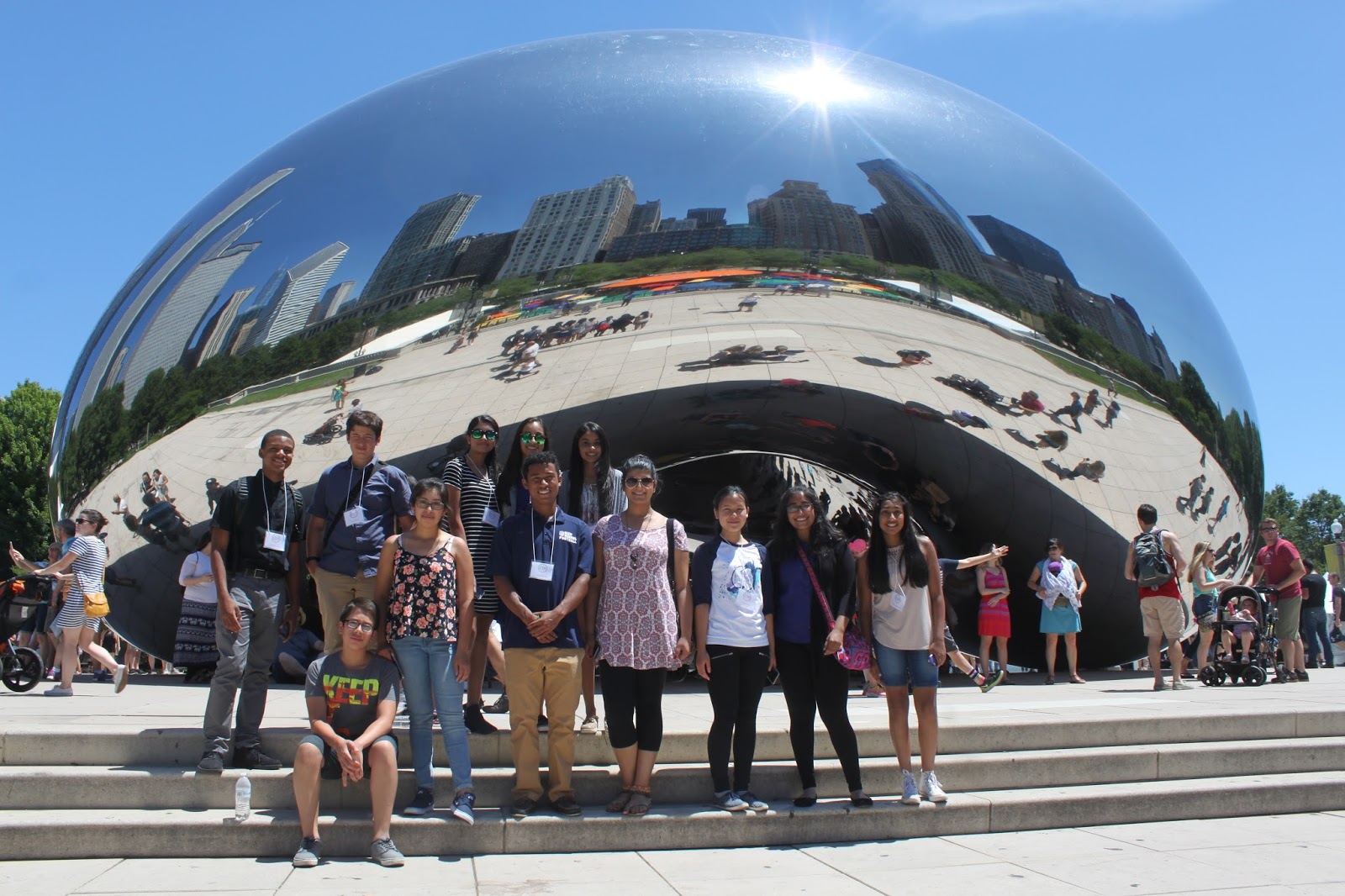
Rhea participated in Allowance for Good's 2016 Global Philanthropy Summit in June. 

The Global Philanthropy Summit Program gave me an entirely new perspective on philanthropy and contribution. When I went into this program, like most teens my age, I didn’t have a clear understanding of philanthropy. I learned that philanthropy is so much more than adults donating money; philanthropy is the contribution of time, ties, talent, and treasure by anyone, regardless of age, gender, race, or background.

At GPS, we were able to meet with many different philanthropic organizations and foundations, and my eyes were opened on so many new levels on philanthropy. For example, we met with V!ng, who empowers teens with giving them the opportunity to help out those in need. By sending videos to V!ng on who you think deserves $1,000 in your life, you have the chance of being selected and actually being able to give $1,000 to someone in need in your life. I worked with V!ng to create a video, and this gave me the chance to realize that regardless of my age, I can make a difference in someone’s life. This was a major lesson I learned from GPS, because like most, I used to think that someone had to be of a certain status to be able to philanthropize and make a difference. GPS, V!ng, and so many other speakers changed this common misconception.

Another big take away that I learned from GPS was that I can make a change in the world now, simply by volunteering my time and talent, using my ties, and giving my treasure to help a cause that I believe in. GPS was really able to expand my horizons and open my eyes to all the different kinds of philanthropic work that I can do. For example, we met with World Bicycle Relief who donate high quality bicycles to those in need in Africa. People like students, merchants, or doctors in Africa all benefit very highly from a single bicycle that helps them increase productivity, and give them a better life overall. After talking to them, I realized that a simple everyday object can make such a huge difference to someone in need. This got me thinking about how I can make simple, yet huge, changes in my community, or maybe even globally.

One piece of advice I would tell to future GPS participants is that they should maintain an open mind in order to better prepare them for the week. GPS took us to many different speakers, who worked in vast ranges of philanthropy. Maintaining an open mind allowed me to consider all options. I believe that future participants should enter GPS with a rough idea about what they want to take away or get from the whole experience, and maintaining an open mind about learning really offers a whole new perspective on philanthropy.

Overall, the Global Philanthropy Summit was able to alter my view on life completely, and I recommend it to any teen who wants to make a change in this world.


Thursday, June 9, 2016

Soles for Kids: AfG Youth Giving Back


Children living in poverty lack many of life's most basic necessities, including a good pair of shoes. Three Allowance for Good youth chose to tackle this issue and give more children across the world the comfort of a good pair of shoes.

Charlie, Danny, and Tim participated in Allowance for Good's Fall 2015 Emerging Leaders in Philanthropy class in the Elmhurst location.

After their participation in the ELP program, Charlie, Danny, and Tim decided to start their own project - a shoe drive for Soles for Kids. Soles for Kids is an incredible charity that collects used, not abused, shoes and soccer balls to distribute to children worldwide. They have distributed shoes to children in need in Africa, Haiti, the Dominican Republic, and the United States.


The three AfG youth organized a shoe donation drive at York High School during a basketball game, where they collected 72 pairs of shoes. They also raised $75 to put towards shipping costs.

All the shoes they collected were given to Soles for Kids and sent to children in Tanzania. These young men acted as agents of change in their community, and their efforts will have significant effects far from their homes. Allowance for Good is proud to see them serving as global citizens and making a difference in the lives of many children.

If interested in running your own shoe drive, you can find more information about donating to Soles for Kids here.


Friday, May 20, 2016

A Lesson in Corporate Philanthropy

By: Therese
Therese participated in Allowance for Good's Spring 2016 Emerging Leaders in Philanthropy class in the Elmhurst location.


"I am a Catalyst for Good because...
I believe all people have the right to
be educated no matter what
the situation." - Therese

Corporate philanthropy is when a business helps others in need by donations or by spending time. I learned that companies can cause a positive change because they can help others, encourage other companies and consumers to help others that are in need. In addition, corporate philanthropy can help a community to become involved in a cause by using their products or bringing the company together by physically helping out others. In addition, being a corporate sponsor provides a positive image for the company itself, which leads to more sales and tax benefits. When I am in the working world, I would make sure that the company (or my company) would donate or support an organization and do physical work to help out those who need help. Overall, corporate philanthropy is important because it gets large companies to help out smaller originations and others that need donations and action.


Sunday, March 20, 2016

Empowering Chicago Students: AfG's Collaboration with Chicago Youth Philanthropy Group

By: Isabelle Canaan
Isabelle has double duty as Chairman for Education and Co-chair on the Executive Board for the Chicago Youth Philanthropy GroupCYPG, a student organization at University of Chicago, was Allowance for Good's first Allow Good collaboration. They strive to "empower the community, one student at a time." In partnership with CYPG, we are teaching over 200 students on Chicago’s South Side at King College Prep High School and Kenwood Academy. CYPG has also acted as our working partner to develop an additional AfG chapter at Northwestern University. 

A black, lesbian, obese, bad feminist, Roxane Gay is the exemplary fighter.  Against the backdrop of Black Lives Matter, a feminist rebirth, and a re-examination of societal values, she, in a talk last fall, discussed allyship. An ally is not a passive role. You have to act, but must do so in a restrained manner, walking the fine line between being a spokesperson, but not THE spokesperson. You must actively fight for a cause without donning it. 

It is so easy now to pick up the banner of injustice, but without authenticity, sometimes when speaking for another you actually harden divisions. Every week, as part of the Chicago Youth Philanthropy Group (CYPG), I discuss current events with public high school juniors and seniors on Chicago’s Southside. Our goal is to give the students a safe space to champion issues and voice discontent. Yet, it would be disingenuous for me, someone who did not go through their experience, to stand in the spotlight or drown them out. As an ally, I have a responsibility to fight, but I should never forget that I am an accessory to their cause. 


My role is a mentor and a facilitator, but also a fellow student. We college students, we are often trapped in an academic and social bubble, viewing the city through the prism of our campus. CYPG has been my way to connect with the neighborhoods beyond the ivory tower and the echo chamber that is academia. My students offer a different, arguably “real-er” perspective. They do not have the luxury of stepping away into the library and forgetting about the discrimination, danger, and dysfunction that exists on the Southside. They confront these issues on a daily basis and it is exceptionally rewarding to see the classroom dynamic succeed. When a student can get up and share a personal anecdote about a time in their lives when they were directly confronted with one of the issues we discuss, the classroom atmosphere succeeds. A safe environment allows students to share openly, without fear of judgment. 

After creating a safe environment, the next most important role as a teacher is to push the students to remain hopeful and to really believe in their individual power to change. There are times when the students will sigh and say, “Nothing’s going to change”, but we must show them that they have the power to create change, no matter how small and no matter how gradual.

Wednesday, October 28, 2015

Lessons in Corporate Philanthropy

By: Tim
Tim is a participant in Allowance for Good's Fall 2015 Emerging Leaders in Philanthropy class in the Elmhurst location. 


"I am a catalyst for good because...
I want to improve the world"
Tim, at the ELP Elmhurst class.
Corporate philanthropy is the giving of profits or resources from a corporation to a charitable cause. When asked about philanthropy, most people think about cash.  However, facilities, services, and time are also considered types of philanthropy.

Certain employers offer matching gifts programs.  With matching gifts, a company will match an employee’s cash donation to an eligible nonprofit organization at some set ratio. With grants, the company provides a nonprofit with money to accomplish an agreed-upon purpose.  The company can also provide volunteer grants, in which the time of the corporation’s employees is also donated.

Reasons for corporate philanthropy could come from a commitment to the common good, a sense that the company is making a community investment, or even that it is a good marketing tool. Whatever the reason, research has shown that corporations with sound corporate philanthropy perform better than those without it. Emily taught me that corporations should have a social responsibility toward philanthropy.  She taught me that employees of a corporation play a significant role in corporate philanthropy.  Using matching gifts, employees can make a larger donation to their charity.

Employees can also donate their time and expertise, which can be as valuable as money. If a corporation doesn’t currently have a philanthropy program, the employee can be instrumental in providing rationale as to why corporate philanthropy is important and then assisting the company in setting one up. When I am in the working world, I can see myself becoming involved in philanthropy by providing donations of both time and money. I enjoy working with other people towards a common goal, and employing our unique abilities to accomplish it.


Friday, October 2, 2015

Making a Difference through Golf

By: Matthew
Matthew is a participant in Allowance for Good's 2015 Emerging Leaders in Philanthropy class in the Elmhurst location


AfG's Emerging Leaders in Philanthropy Elmurst students.
For the past seven years I have been involved with an organization called Revelation Golf. This group was founded by two women, one of whom is a trained physical therapist and the other of whom is a former professional golfer and golf coach. They started this group to help people with physical disabilities learn the game of golf. This includes children with physical limitations (like myself) as well as veterans who have been injured. In most cases the people with whom they work are not able to play sports the way that able-bodied people do but golf is something that many people can figure out how to do. Because of the background of the two women (therapy and golf) they can usually figure out a way to teach their participants how to work around their limitations and hit the golf ball pretty well.

The two women who run the organization are an inspiration to me. They both could've made a lot more money doing what they were trained to do (therapy and golf coaching) but have chosen to sacrifice their own self-interest in order to help others. The obvious joy on their faces when their participants do well on the golf course is great to see. They both took a big risk in their lives by deciding to do what they were passionate about but I think they're glad that they made the choice that they did.

In the past, I've helped this organization by volunteering at their annual golf outings, being featured in their promotional literature and videos, and giving speeches at various events.  Also, my mom is on the board of directors and both my mom and dad have been involved in helping to organize the annual golf outing fundraiser. Over the years it's been interesting to see how the organization has changed and it's been wonderful to see how many hundreds of people have been helped.

After all these years, it really feels like the women who run this organization have become part of our family and I think they would say that we're part of their family as well. Going forward I hope to be able to stay involved with them in whatever capacity they need me. Teaching disabled people to play golf may seem like a small, somewhat unimportant thing, but I can attest to the fact that it makes a big difference by allowing people to be able to do something outside with their friends and family and by helping people become more active in their community. It’s also a lot of fun! They truly are an inspiration and I hope to stay involved so that we can continue helping people with disabilities to play the great game of golf and more importantly to learn that that their physical limitations should not prevent them from doing something they want to do.

Monday, September 28, 2015

Kicking the Soccer Ball towards a Better Future

By: Madeleine
Madeleine was a participant in Allowance for Good's 2015 Global Philanthropy Summit. She is now partnering with AYSO and one of our Global Affiliates, Spark Ventures, to provide soccer supplies for children in Zambia and Nicaragua. To donate to her project please check out her Go Fund Me page.


Soccer can reach across language barriers.
Hi! My name is Madeleine Beirne and I attended the venture philanthropy GPS program this summer. Through the AfG program, I was able to meet an amazing organization called Spark Ventures, that helps communities in Zambia and Nicaragua create thriving businesses, and introduce myself to Lucy Jodlowska and Arnold Duijzer, who encouraged the group to help think of games and activities that the children (in Zambia and Nicaragua) and the people coming with Spark Ventures could participate in to help introduce themselves and learn from each other. We were aware that there were both language and age barriers between the children and the people with Spark Ventures, so one of the main activities that the group could participate in easily was soccer, which is wildly popular in both places.

Before the AfG program, my dad and I had spoken about the idea to partner with AYSO, the national soccer league in America, and start a donation drive where AYSO participants would be able to donate their old jerseys, uniforms, cleats, and soccer equipment. One of the main things I was trying to figure out, however, was what organization to donate them to. While trying to brainstorm ideas for Spark Ventures, I realized that this would be a perfect opportunity to connect this idea with Spark Ventures and see if they would be interested in the donations.
Maddie, on right, at AfG's Global Philanthropy Summit.
Through AfG, I was able to connect with Lucy and figure out the details of the soccer uniform donation drive. One of the main things that I took away from the AfG program was how important youth driven philanthropy is, both to our world and to future generations. AfG helped me make connections with organizations and people, and it made me realize that, as youth, we have the power to inspire and help others.

With the amazing support and cooperation of AYSO, the American Youth Soccer Organization, my dad and I were able to set up a tent at the AYSO lakefront soccer fields and collect old soccer uniforms and equipment from AYSO participants, which we will be doing every Saturday for a couple of weeks. Amazingly, we were able to collect hundreds of uniforms, cleats, socks, soccer balls, and other equipment on just the first day. This equipment will be going to children in Nicaragua and Zambia, the two locations where Spark Ventures has helped create thriving businesses in, and it will be shipped there within a couple weeks. We are dividing the uniforms into teams so that the children in both locations are able to form teams and create a smaller soccer league, that even the Spark Ventures visitors can participate in!
Some of the soccer uniforms Madeleine has collected.

Because we have a multitude of equipment to ship to both of these locations, I have started a go fund me page, where people can donate to help us ship the soccer supplies to Zambia and Nicaragua. If you can, a donation would be greatly appreciated and accepted! The link for the page is: https://www.gofundme.com/uu4pd4z4

We didn’t have an initial goal for the project, but Spark Ventures needs around 170 uniforms and an assortment of other soccer equipment, which we’ve already exceeded this goal and have collected hundreds of uniforms already!  This project has taught me a lot about youth driven philanthropy, and how much power the youth have in our community. AfG has taught me the value of not only service and giving back to the community, but also the value of connecting with people and utilizing the resources that are available to me. For young people like me, I would encourage you to utilize the resources around you and make connections with people that will inspire you to inspire others. Thank you AfG and Spark Ventures!

Monday, October 27, 2014

Philanthropy in the World: More Than One Meaning

By: Abby
Abby is a participant in Allowance for Good's Autumn 2014 Emerging Leaders in Philanthropy: Explorers class. 

Although my time is limited in Emerging Leaders in Philanthropy (ELP), I have learned that philanthropy has more than one meaning. The literal meaning of philanthropy is "the desire to promote the welfare of others". The etymological meaning of philanthropy is "the love of humanity". Yet, as I sit here on a Tuesday night in Evanston, IL, writing this blog post, it has finally hit me: philanthropy is not restricted to the definition of a dusty dictionary sitting on my desk.

Last session, we continued studying the types of philanthropy in depth. We discussed two "main" types of philanthropy: corporate and venture. Venture philanthropy is focused on the willingness to take risks and experiment, having a long-term structure set up, and focus on direct engagement from the donors with their grantees. Corporate philanthropy is focused on the belief that a company needs to be responsible for its actions-ethically, socially, or environmentally. Also, corporate philanthropy is a huge supporter of corporate giving, which is a grant making program established in a profit-making company. it is from these programs that gifts or grants are distributed to charitable organizations. Learning about these two different types of philanthropy interested me a lot because it made me think about myself when I get older. I want to become involved in a company that are corporate philanthropists and give back to the community.

For the second half of the session, we had Allowance for Good Associate Board members Tife and Ryan talk with us about what we have learned so far. Tife grew up in Nigeria and then moved to Chicago later in life. The first company he worked for were "terrible philanthropists" (as he put it), meaning that they did not give back to the community and really did not involve themselves in it. However, when he received a new job at a real estate company, that completely changed. Tife informed us that at his job now, he receives an email once a month that asks what charity/organization he would like to donate to. His company matches tries their best to match his donation request and donates it to that company. Ryan, born and raised in Hinsdale, IL, is a credit analyst at Northern Trust. He told us a lot about his occupation and what he enjoys about work, but what really stuck with me were what he calls his "3 Pillars". They were:
1) Always, always, always stay curious.
2) Know your environment.
3) Know your limits & defy them...but also know your job/responsibility and do not become suffocated.

I know for a fact that these 3 pillars will help me grow as a young woman, student, philanthropist, and overall a human being. Staying curious is the beginning of a question, which leads to an interest, which leads to a passion. ELP has really been the beginning "question" phase for me. I have never been that passionate about any specific world problem; of course, I wanted to change them all. Coming to ELP has helped me realize that even though I may not have a certain passion now, there is always something I can do to help people in the world who are not as privileged as me.

I know this is going to sound very cliche, but there is only one world humans live in (unless we magically find Earth's twin in the universe). Humans are not the only beings on Earth, but we are the most powerful beings. It is our duty to help each other while protecting the ground we step on, the air we breath, and the grass we mow. So, to end the post the same way as Ryan ended our session, "We are rich through only what we give. We are poor through only what we refuse."

Abby stands in front of her favorite leadership quote during an activity in ELP: Explorers.


Monday, September 29, 2014

Multigenerational, International, Experiential Journey

By: Jeanne
Jeanne was a traveler on the Allowance for Good / Spark Ventures trip to Nicaragua this August. 

During one of our trip participant dinners in Leon, Nicaragua, Jeanne, a 43 year-old, mother of two shares, “I have done some reading and studying about Nicaragua since my last visit.” The unexpected reply, “I love to read about history. I read about Nicaragua too! It was a wonderful book, called The Jaguar Smile: A Nicaraguan Journey by Salman Rushdie,” says Nina, 14 year-old member of Allowance for Good. I, Jeanne, sat back, amazed that this young woman has read this book. Amazed that she has chosen to take the time to prepare herself for her first experience with global philanthropy.  This was just one piece of the tapestry of conversations that I would have, as we traveled with the youth group, Allowance for Good.

My husband, Jeff, and I have been Spark Ventures investors for many years.  In 2013, we travelled to León, Nicaragua to see and participate in the work that Spark has been doing at a grassroots level.  What we saw stunned and changed us in so many ways during that trip and for the months to come. Soon after our return, we decided that we would bring our boys, Luc (12) and Ben (9), back with us some day.

We were committed to the idea that we must raise global citizens. That we had to challenge our children to step away from their day to day lives, look up from the screens and frankly, out of their comfort zone.  How can we make the world better if don’t truly experience many of the cultures, people and perspectives that make up our mosaic called Earth? 

Early in 2014, we heard that Spark would be partnering with another philanthropy on the next trip to Nicaragua, a group that worked with teenagers in the areas of leadership and philanthropy. While 10 months was a bit faster than we had planned, we decided this was our opportunity and the group to share our family experience with, down in León. 

Being in a completely different country, with a different socioeconomic environment, speaking a different language, eating different food, hearing different music and doing it all in a very different climate, can be unsettling.  The closer it drew the more we went through our concerns.  We didn’t know how our children would react.  We weren’t sure how the other group would either.  Would we and/or our children be welcomed or simple tolerated?  Will they befriend our boys or think them too young to bother with on this trip?  As it turns out, everyone exceeded even our highest expectations.

You see, these are not your normal teenagers, enamored with Disney, Xbox and the multitude of burgeoning social media tools.  Remember that Rushdie novel Nina mentioned? It was just the first of many pleasant and impressive surprises they had up their sleeves. Spending time with Allowance for Good and the five youths that we had the honor to accompany on this trip was, frankly, an inspiration to us as parents with children just a few short years behind the AfG youths. 

There was Turner, age 15, he came with an open mind and heart to everything that was happening around him.  When matched up with children who couldn’t speak English, he kept smiling, made up a game and in no time had a shy little child at Las Tias laughing and happy.  And Turner, well, he has a plan.  A sophomore in high school already thinking about what he wants to be, where to go to college, what that means to his family and maybe win a few more diving medals in the process.  Turner participates, he is present, he wants to learn about everything and everyone.  And how was he with our boys?  Well let’s just say that our son Luc is begging us to let him head out to Africa with Turner next summer, so that they can continue their journey of friendship and immersing themselves in global philanthropy.  And there are so many other moments, memories and stories of how each of the teens made an impression that will stay with us for the rest of our lives.

It was very clear to Jeff and I how lucky we were to have our children spending time with and learning from our AfG companions.  They are not the teenagers who move quickly away from something new and uncomfortable, or find their friends to avoid being part of the community.  They engage, they learn, they teach and they are infinitely interested in growing.

Isn’t this what it’s all about?  Our world is getting smaller, true. But it can also be more isolating. Social media gives young people windows to the world in ways that were never before possible.  Yet, Nina, Turner, Nicky, Orleana and Sylvana, that just isn’t enough for them. They are not content watching from the sidelines, or watching a video of someone else creating an experience. They wanted to a part of every moment we had with the women and children of Las Tías. To learn and grow EVERY single day. It wouldn’t have been the same trip without them.  We are blessed for having spent that time with them, they were a part of OUR learning and growth experiences, as well as our children’s.

It’s a tradition on these trips to share your experience with the other participants at the final group dinner.  Well, AfG was already doing that in their daily Reflection sessions.  We were just blown away how deeply these teens were thinking about the experience, how to build on it, how to integrate these thoughts and feelings into their development.  And at that final dinner, their thoughtfulness, maturity and character was on full display.  We’d heard from our peers during the other trip and spoken with many that had visited Spark partners in Zambia and Nicaragua.  And these teens were just as self-aware, had grown just much, and were developing plans on how to continue on their philanthropic life journey.

Keep your eye on these kids, help them if you can and they will ‘help’ you in ways you hadn’t thought possible.  These are the youths that will help us evolve as a global community.  The kind that will lead their generation and others, into the future and do it for the betterment of ALL of us. 

Jeanne, right, presents Las Tías with educational materials for their students.

Thursday, May 29, 2014

Big Questions, Bright Future

By: Ellie
Ellie participated in Allowance for Good's spring 2014 Emerging Leaders in Philanthropy: Explorers program. 

My favorite part of the Emerging Leaders in Philanthropy program was without a doubt what we learned on the last day of class. We read online about the United Nations Millennium Development Goals. The goals were implemented at the turn of the millennium, with an end date of 2015. They were very ambitious; they included everything from eradicating extreme poverty (sadly, this probably won’t happen in the next year) to improving maternal health (the goal didn’t specify by how much, so this was almost a foregone conclusion).  They have also come up with some new ideas for their next set of goals. The plans aren’t set in stone, but they involve energy sustainability, food and water, a growing economy, good governance, and conflict resolution. Overall, the UN still has a long way to go. They have taken some important steps, however, which is a big deal.

193 nations (most of the world’s population) working together to solve all their problems and improve our futures? It may seem a bit unattainable, but the idealist part of me is really excited about all this. This sort of global problem-solving interests me. These issues are a lot more complicated than they may sound; solving them will rely on the cooperation of far more people than have ever cooperated before.  I will follow this progression closely.

For me, I know, I will probably be a scientist—and there is so much that science can do! There is water to be purified, disease to be combatted, and systems of agriculture could always use improvement. Every new piece of knowledge, even something as unrelated as space or esoteric as string theory, could help others.

In the short term, of course, I still have a lot to contribute. ETHS has a wonderful community service system—as do lots of other schools, I’m sure. And I’ve been dying to study abroad ever since I started high school, so maybe I could combine that with philanthropy. Many colleges have programs where you can travel to another country to help out with community projects (e.g. building a school in Guatemala). Even tiny actions, like recommending Half the Sky, can’t hurt. Seriously, watch that movie.

I would like to learn more about how all this selfless philanthropy is changing the world. Individual and group efforts are themselves inspiring, but that’s their ultimate goal: global change. The UN has achieved overwhelming success (by any reasonable definition). Two billion people gained access to clean water—see http://www.un.org/millenniumgoals/pdf/report-2013/mdg-report-2013-english.pdf. How does that affect everyone? What effects do these organizations have even beyond the intended ones? How will the world evolve in the rest of the century?

"I am a catalyst for good because good is waiting to happen." -- Ellie, 9th grade, ETHS

Friday, April 11, 2014

AfG Youth Empowered to Make Change

By: Nina
Nina is participating in Allowance for Good's inaugural Emerging Leaders in Philanthropy: Changemakers program.

Throughout the past few sessions of the ELP: Changemakers program, I have been exposed to a variety of components of the grantmaking process. In class thus far, we have covered aspects such as what makes up a non-profit (executive director, founder, board of directors, advisors, etc.), the relationship between grantors and grantees, what factors grantmakers have to take into account when awarding a grant to a non-profit, and what kinds of documents must be filled out for grantees when applying for a grant.

As a part of our weekly sessions, we have had the opportunity to look at actual grant applications, and to answer the questions posed on the application form as representatives of a real-life non profit organization. In order to help us understand what RFPs, or Requests for Proposals, which a non-profit typically fills out in order to get a certain amount of money from a foundation or other organization, such as the government, are, we created our own proposals and had a couple of members of Allowance for Good's Advisory Council give us feedback. We also had the chance to act as grantors, and write a recommendation for a non-profit worthy of a grant. These activities have all helped me gain a deeper understanding of what I think is the hardest part of having a non-profit: making sure that it functions efficiently and with the greatest impact.

For me personally, what I think are the most surprising and challenging components of the nitty-gritty aspects of non-profit long term impact and success is a) how much a person needs to know about the organization and b) how much information needs to be taken into account in the grantmaking process. You have to be able to not only talk about your organization's successes, but also its failures and how those failures have been fixed. I have learned that there is a lot more that goes into the finer aspects of what keeps an organization running smoothly, and it is not as easy as it seems. The knowledge that I have gained during this class will allow me to become a better philanthropist as I continue to work with Allowance for Good and other organizations, because it has prepared me to think about how to help a non-profit organization continue to have the greatest impact. Armed with these skills, I feel more empowered to have the ability to make a change.
Nina, left, and Zoe pose for the camera during the 2013 Global Philanthropy Summit.

Thursday, April 3, 2014

Allowance for Good: Creating Changemakers and Citizens of the World

By: Danielle Siebert
Danielle is an Allowance for Good parent. 


As parents, we want the best for our kids. We want to give them everything they’ll need to be successful in their lives. So often, however, our focus is on whether or not they attend the best schools, make the right grades, play the sport of their choice or spend their free time constructively. We are so fortunate to live in a community full of amazing resources and opportunities to help our children to succeed in every traditional sense of the word. But I’ve often wondered…is this really enough?

Despite all of these fantastic opportunities and abundant resources, are our kids really developing the skills they will need to find and create their own happiness? How will they discover what they are truly passionate about? Can they connect with others in a meaningful way? Will they grow up confident and kind? Most of all…will they become citizens of Chicago’s north shore or will they truly become citizens of the world?

The idea of service has always been important in our lives. My husband and I were fortunate to have parents who valued both volunteerism and philanthropy. We grew up knowing that we are so small in this big world and that it would be our efforts to connect with and help others…near and far, friends and strangers…that would bring us the most happiness. For us, this is one of the most important things we can pass on to our children. Their greatest joys will come from reaching out, connecting with and helping others and having the confidence to discover and follow their own passions. What a joy it has been to see our daughter grow and develop in these ways during her involvement with Allowance for Good.

Last fall, our daughter, Clara, was a participant in the Emerging Leaders in Philanthropy (ELP) Explorers program offered by Allowance for Good. Through their fantastic speakers, seminars and discussions, Clara gained a much better understanding of the many ways that she can get involved with local and global issues and organizations that she cares about. She has always been a kind, thoughtful and curious person, but was sometimes shy and a bit hesitant. Well, no longer! We’ve seen such a transformation in her and especially in her desire to become involved in leadership roles in her school, in her extracurricular activities and among her friends. The ELP program has helped her realize that the words “Be the Change” are far more than just words.

The teens who attend the programs offered by AfG find such determination relative to the changes that they can bring about…in their own communities and around the world. They are learning skills that will help them leverage resources effectively and they are gaining confidence in themselves and their abilities. Additionally, they are finding the joy that comes from doing something that they are passionate about. They are discovering how nonprofits work to connect, help and inspire. And they are learning that connecting and “giving back” can be about far more than just donating money. They see firsthand the difference that only one person can make and they see the big changes that they themselves can create.

We are looking forward to our daughter’s continued participation in AfG’s programming…especially the ELP Changemakers program and hopefully a trip to one of the global affiliates in the coming years. As a parent, there’s nothing more rewarding than seeing your child become passionate about helping others. We see her developing the same appreciation for volunteerism and philanthropy that we value so much. We are so grateful to AfG for helping our daughter and her fellow ELP participants along their road to becoming kind, caring and passionate citizens of the world!